Join our Fall Farm Tour or Seed Saving Workshop
How to Grow Solanaceas Successfully
How to grow tomatoes, potatoes, peppers & eggplant using permaculture principles. Varieties, trench planting, guilds & midsummer care from Bethany Farm
PLANTSSOIL


By Dave & Nicky Schauder

What Are Solanaceas? (The Family Overview)
Shared Traits Across the Family
One of their most unique shared traits is the ability to grow adventitious roots along their stems. The more of the stem you bury, the stronger the root system becomes. As a group, they are generally warm-weather plants that focus their energy on producing heavy yields of fruit.
It's precisely because of this fruiting that these plants tend to be heavy feeders — a term our garden mentor John Jeavons uses to categorize plants that use up a lot of nitrogen and other minerals to produce. Tomatoes in particular require high levels of calcium during the fruiting phase. Without it, we get common issues like blossom end rot.
They love warmth, but not extremes. When temperatures spike above 100°F, Solanaceas drop their buds and stop setting fruit — not because something is wrong with your gardening, but because pollination simply can't happen in that heat.
Why Solanaceas Are Pollinated by Bumblebees, Not Honeybees
Solanaceas are pollinated by vibration, not honeybees. Bumblebees and other large wild bees vibrate at a frequency that releases pollen from Solanaceae flowers — a process called buzz pollination. This is one more reason to cultivate a pollinator-friendly garden around your summer crops.
Crop Rotation and Why It's Non-Negotiable
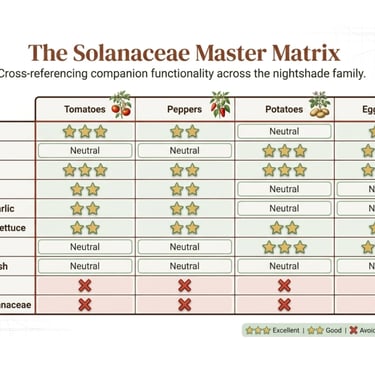
Because they share the same pests, diseases, and nutritional requirements, crop rotation and companion planting are non-negotiable for this family to keep soil healthy long-term. Never plant Solanaceas in the same bed two years in a row, and never plant them next to each other in a guild.
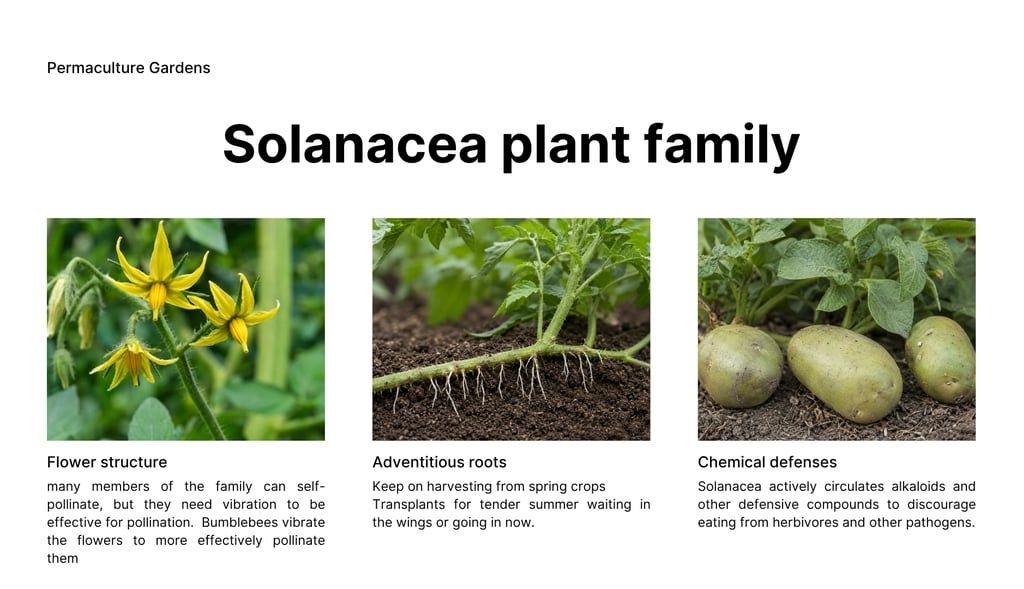
We're zooming in on the Solanaceae family in this article because it includes many of the summer crops that we like to eat and grow: tomatoes, potatoes, peppers, and eggplants chief among them. This guide is written for real families who want a highly productive garden without needing to be "experts" to get started.
But first, we need to know what exactly Solanaceae family members are — because if you've grown one member successfully, you can apply those same principles to the others.
Growing Tomatoes the Permaculture Way
Dave and I have grown about 50 to 60 tomato varieties over the years. Tomatoes are definitely number one in terms of variety and diversity — and we recommend experimenting even if you've already found one that works well.
Determinate vs. Indeterminate: Which Is Right for You?
This is the most important decision you'll make before buying a tomato plant.
Determinate tomatoes grow in a bushy form, top out around five to six feet, and produce most of their fruit in a concentrated window. This makes them ideal for canning — you get a big flush all at once and can process it together.
Indeterminate tomatoes are vining. They can grow 10 to 12 feet long, need significant staking or support, and will keep producing right up until frost. If you want fresh tomatoes on the table all summer, indeterminate is your answer.
We tend to grow semi-determinates for this reason — you get continuous harvest without having to stake and support 12-foot vines all season.
Tomato Varieties Worth Growing
A note on heirlooms before we dive in: heirloom varieties are ones where you can save the seed and grow the same plant next year. F1 hybrids are not stable — save their seed and you may get something completely different. If you're only going to save seed from one plant this year, make it a tomato. They get more acclimated to your specific climate with each generation, performing better the longer you grow them.
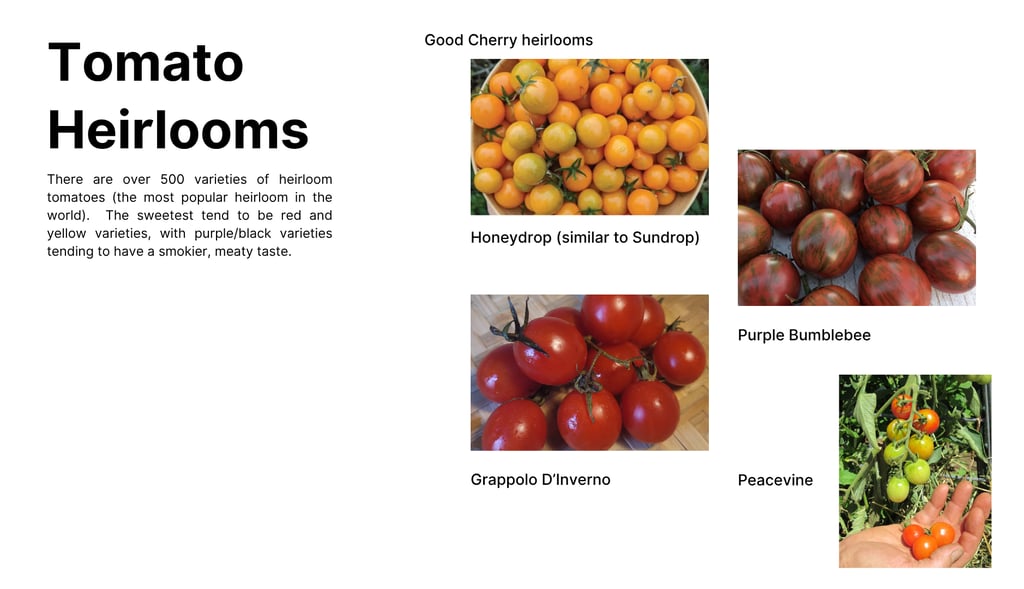
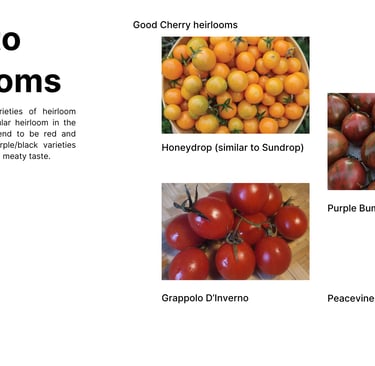
Cherry tomatoes
Honey Drop — very sweet yellow cherry, prone to cracking in heavy rain events
Corpolo di Inverno — thicker skin than most cherries, holds up much better
Purple Bumblebee — complex, beefsteak-like flavor in a cherry size
Peace Vine — the most productive cherry we've ever grown; one plant can produce 100 pounds
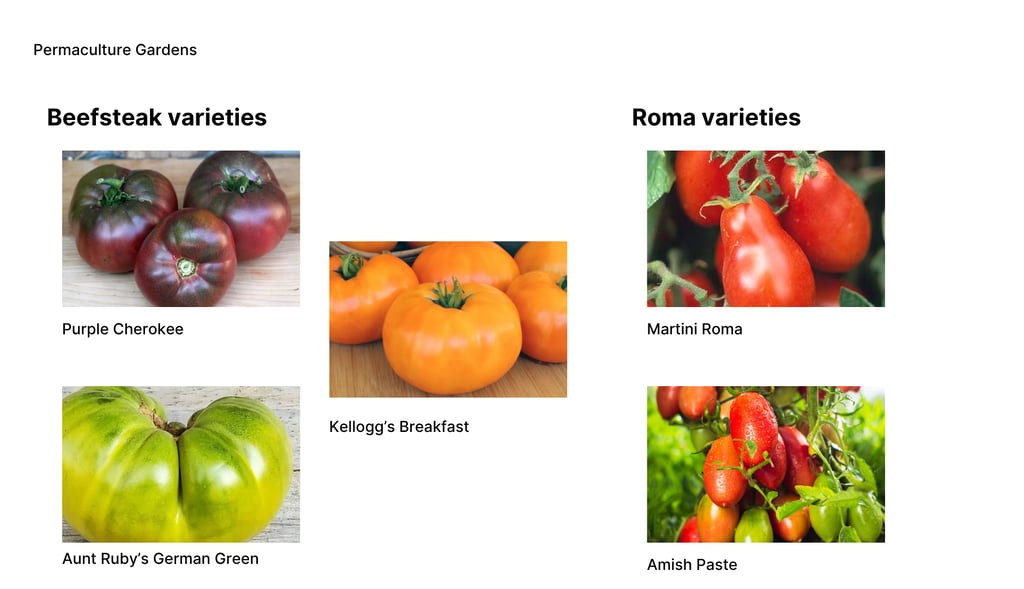
Beefsteak tomatoes
Cherokee Purple — the classic heirloom; reliable, disease-resistant, smoky and meaty flavor
Kellogg's Breakfast — large orange variety, up to two pounds, very fruity
Aunt Ruby's German Green — tangy flavor; looks unripe to insects so gets less pest pressure
Roma tomatoes (for processing and canning)
Martini Roma — determinate, small but intensely flavored, perfect for a concentrated harvest
Amish Paste — larger than most Romas, lots of flesh, very manageable for home processing
For short seasons (upper Midwest, Pacific Northwest)
Stupice — potato-leaf variety, matures in about 65 days
Yellow Taxi — reliable slicer for cooler climates, great flavor
Black Krim — solid heirloom option for shorter summers
How to Trench Plant Tomatoes
Because of that adventitious root trait, tomatoes are one of the best plants to trench plant. Here's how:
Instead of digging a round hole, dig a trench lengthwise. Lay the tomato on its side — even if it's leggy, even if it already has fruit on it — and bury the entire stem horizontally. Leave just the top few inches pointing up. The buried stem will root all along its length, giving you a far stronger and more drought-resistant plant.
Before transplanting, remove all leaves except the top cluster. This reduces the workload on the plant while it's getting established — it won't have to pump water up to leaves it can't yet support.
Water both the pot and the soil before you move the plant. If it's hot, do this in the early morning.
How to Prune Tomatoes and Manage Disease
By mid-July, most tomato plants start to flag. You'll see yellowing leaves, spots, and general decline. This is normal — but you can slow it down significantly.
When plants are still young and around two feet tall, remove the lower leaves proactively. Most tomato diseases — early blight, late blight, septoria leaf spot — start in the soil and splash up onto the lower leaves during rain events. Removing those lower leaves breaks the cycle before it starts.
As the season progresses:
Remove diseased or crossing branches first
Pinch suckers (the growth that emerges between the main stem and a branch) to direct energy toward fruit
Do not compost diseased leaves in a cold pile — hot compost them or bag them. You don't want to reintroduce that pathogen into your garden next season.
The Calcium Question: When Eggshells Actually Help
Tomatoes need calcium most during fruit development — which typically peaks in July. Side-dressing with crushed eggshells at that point gives the plant a slow-release calcium source right when it needs it most. Adding eggshells in spring, before fruit set, is less targeted and less effective.
Growing Potatoes Without Buying Seed Potatoes
Potatoes are one of the few cool-season Solanaceas, which means you can grow them in spring and fall — a useful fact if your summers get hot quickly. In our climate (Zone 7a), we plant in February or March and harvest in late June to early July.
What Happens When You Plant Grocery Store Potatoes
You can grow potatoes from grocery store tubers — but know that most store potatoes come from long-season varieties bred for northern climates like Maine or the upper Midwest. They may not perform as well in your region. Seed potatoes from a garden supplier will give you better, more predictable results.
Potatoes grow as tubers along the underground stem. The plant will emerge, flower, and then gradually die back. That die-back is your signal: when the top growth is gone, you're at peak harvest. The kids love harvesting potatoes because it's like a treasure hunt.
Hilling vs. Not Hilling — What Actually Matters
Conventional advice says to hill potatoes — mounding soil up around the stem as it grows, since tubers form along the buried stem. This works well. But if you're planting deep enough (12 to 24 inches), you can skip hilling entirely. We've had excellent harvests going the lazy route.
The laziest method of all is the Ruth Stout method: place seed potatoes directly on the soil surface, cover with six to twelve inches of rotted hay or compost, and leave them. The potato grows right through it. When harvest time comes, pull back the mulch and your potatoes are sitting right there — no digging, no accidentally slicing them with a spade.
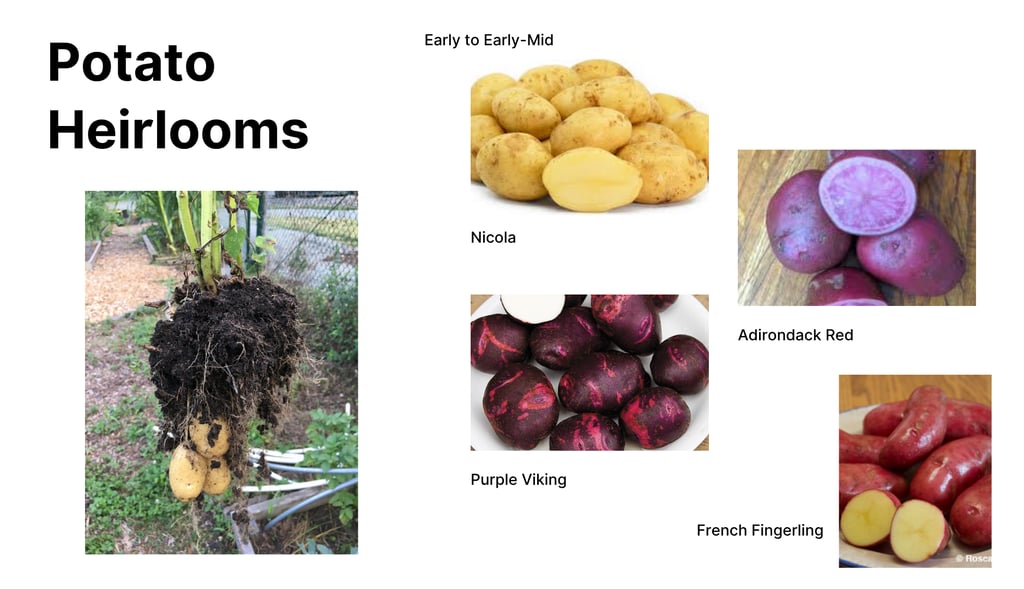
Potato Varieties Worth Growing
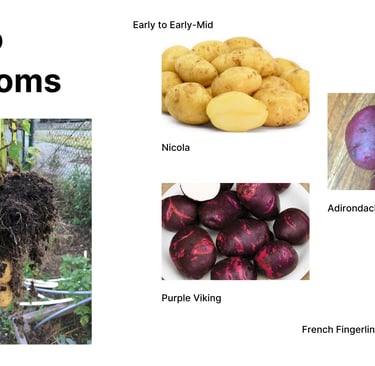
Adirondack Red — red flesh, high in anthocyanins, genuinely nutritious and beautiful on the plate
Purple Viking — red skin, white flesh, excellent flavor
Fingerling varieties — smaller, elongated, considered gourmet but very productive per plant
Growing Peppers and Eggplant Successfully
What Makes Peppers Easier Than Tomatoes
Peppers are actually easier than tomatoes in one important way — fewer pests go after them. Deer and groundhogs will eventually get to them, but peppers aren't their first choice.
Hot peppers use the Scoville scale to measure heat. One thing most gardeners don't realize: you can control how hot a hot pepper gets by when you harvest it. Pick early for milder flavor. Leave it on the plant and let it turn red, and the capsaicin compounds intensify. That jalapeño you forgot about for two weeks and then ate thinking it would be mild? That's why it knocked your socks off.
Sweet peppers start green and gradually turn red as they ripen. If they get too much direct sun during that transition, the walls can get scalded — almost burnt-looking. Some varieties are more susceptible than others.
Pepper varieties worth growing:
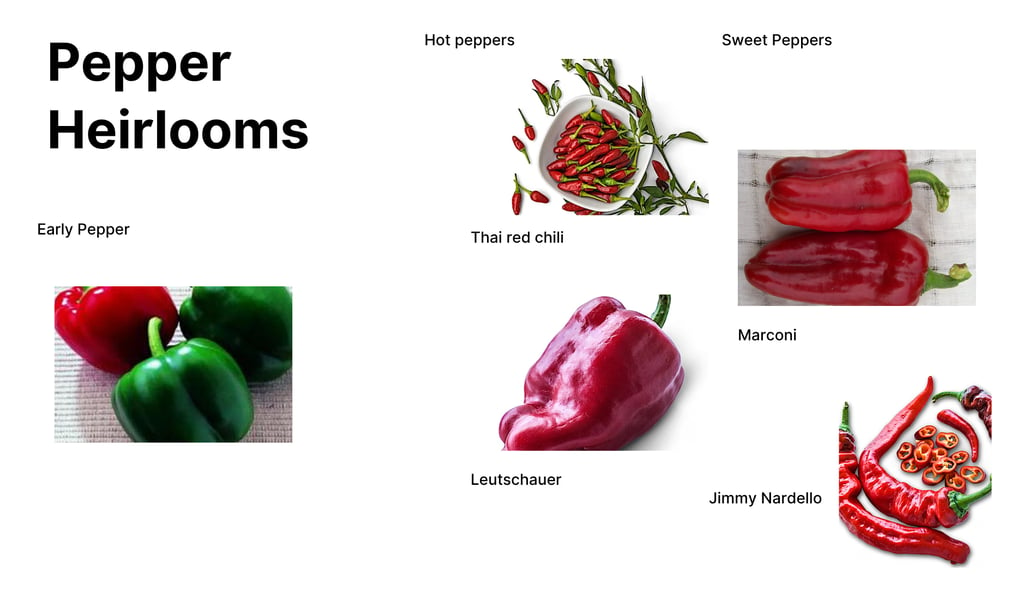
King of the North — sweet bell pepper that performs well in cooler, shorter seasons
Marconi — large Italian heirloom, seven to eight inches long, very reliable
Jimmy Nardello — sweet frying pepper, fast-maturing; still possible to plant even if you're starting late in the season
Leutschauer Paprika — Hungarian variety, excellent for drying and making smoked paprika
Thai Red Chili — early maturing, reliable producer, great for Jamaican curries
Unlike tomatoes, pepper stems are more brittle and don't root as aggressively along the stem. Don't trench plant peppers. Instead, bury the stem deeper than usual — upright, not on its side — to take advantage of whatever adventitious rooting they will do without risking snapping the stem.
What Makes Eggplant More Difficult — And How to Fix It
If tomatoes are easy and peppers are easier, eggplant is the challenging one. The number one reason: flea beetles.
These tiny black beetles will pepper the leaves of your eggplant with thousands of tiny holes. Diatomaceous earth helps somewhat, but the most reliable solution is row cover — a physical barrier that keeps the beetles off entirely. Remove it once plants are large enough to shrug off minor damage.
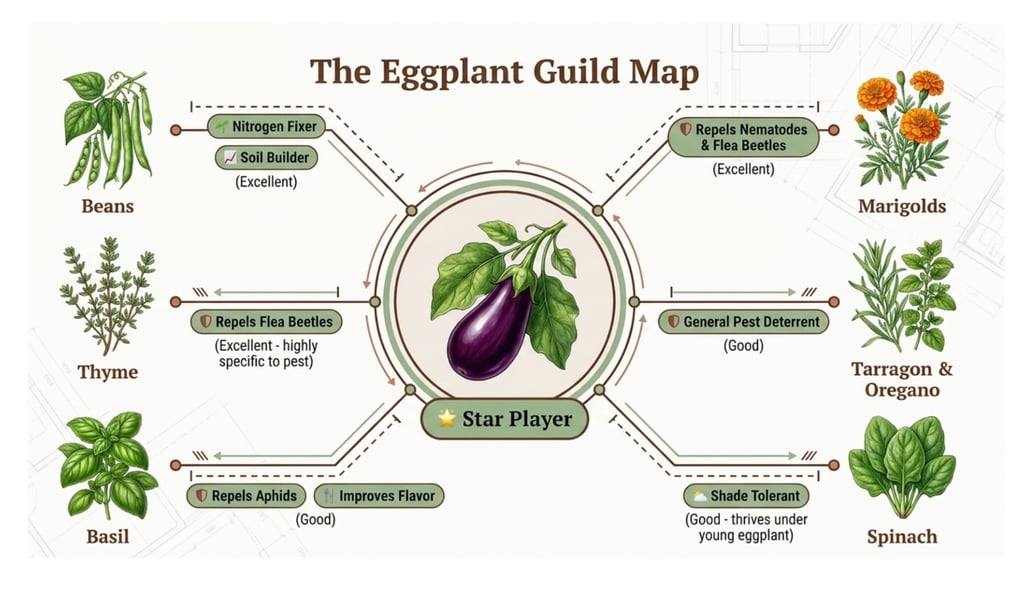
Eggplant also loves heat and water more than its Solanaceae siblings. Don't let them dry out. Interestingly, planting eggplant near thyme — a perennial — can help repel flea beetles. If you have a herb or pollinator garden, that might be the best home for your eggplants.
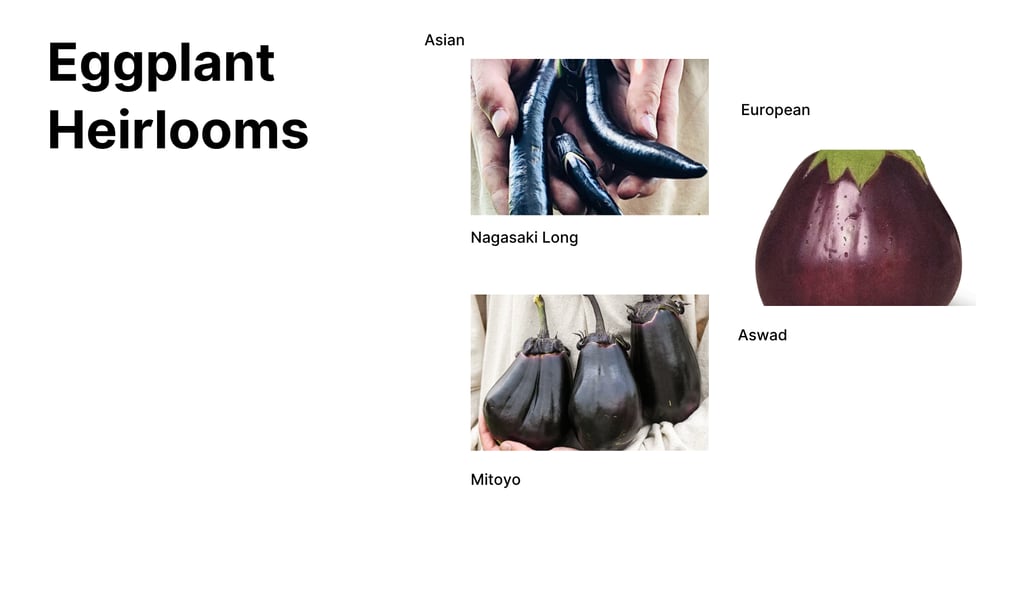
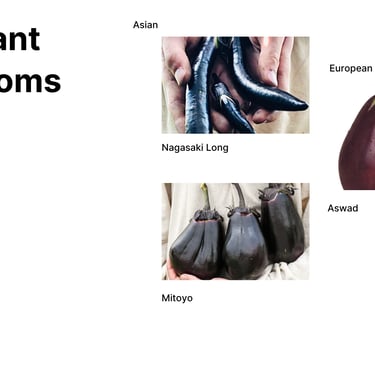
Most people are familiar with the large, elongated purple European eggplant. Asian varieties tend to have thinner skin, which makes them more flavorful and easier to cook down in curries and stir fries — some can even be pickled and eaten raw.
Eggplant varieties worth growing:
Nagasaki Long — elongated, very soft, cooks down beautifully
Mitoyo — skin so thin it can be pickled or eaten raw
Aswad — Middle Eastern, classic purple, excellent for eggplant parmesan
Companion Planting for Solanaceas: Building Annual Guilds
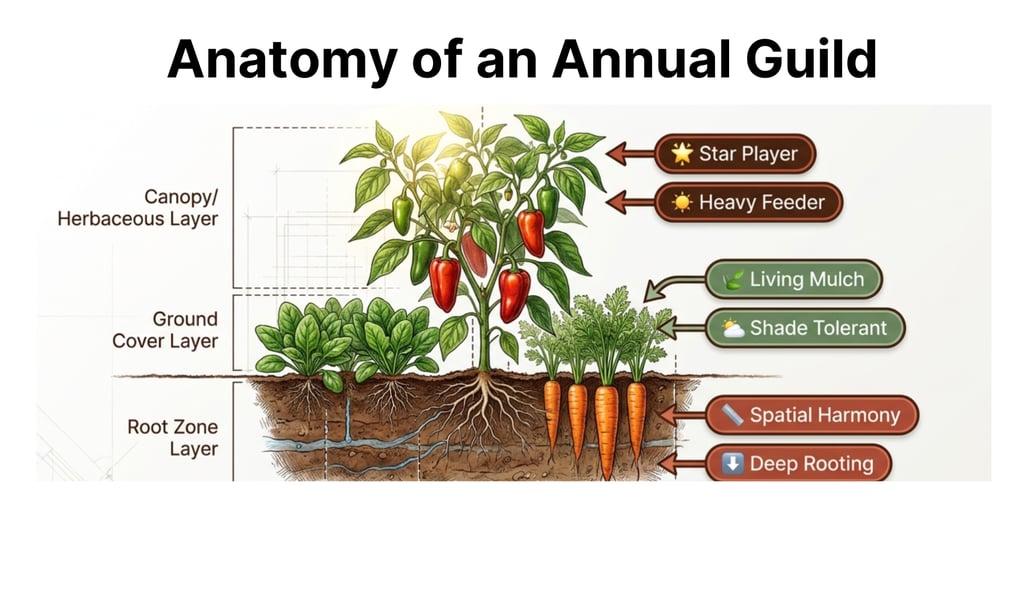
When we think about companions for this family, we think in terms of guilds — groups of plants that each fill a function. We're looking at annual guilds that mimic a natural ecosystem, with a star player (the tomato, potato, or eggplant) surrounded by supporting species.
The Tomato Guild
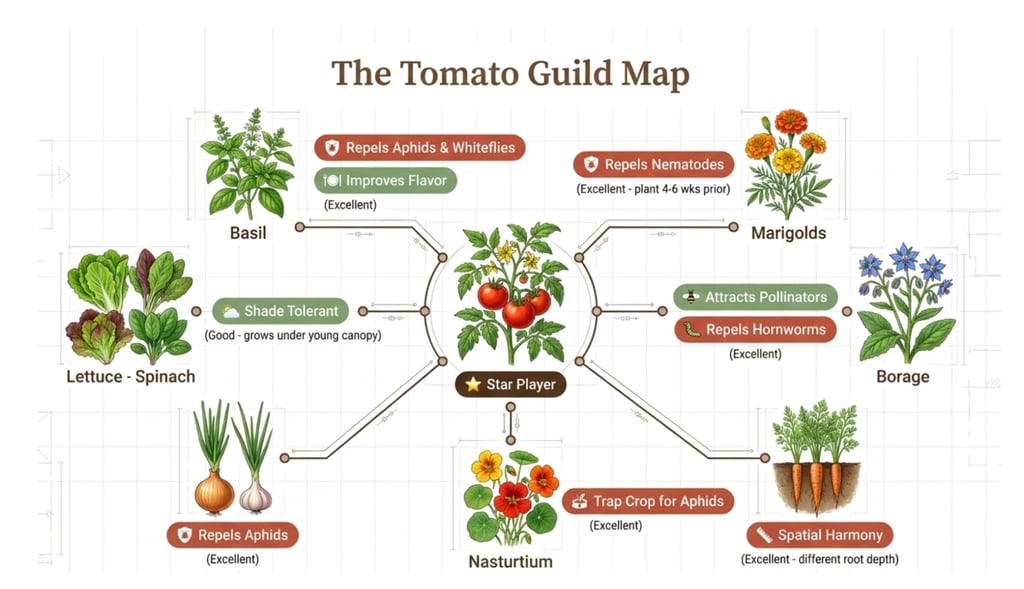
Think of the space around your tomato in terms of what each plant does:
Pest repellents: Marigolds deter tomato hornworm; Borage repels hornworm and attracts pollinators; Nasturtiums act as a trap crop that draws aphids away from tomatoes
Nitrogen fixers: Bush beans — plant six to eight around one tomato plant
Living mulch: Lettuce and spinach in early spring, before tomatoes go in; they die back right as the tomatoes need the space
Late season gap fillers: Once July hits and early crops are done, plug in heat-tolerant herbs and flowers to keep the guild active
On bush beans specifically: bush beans release most of their nitrogen when they're not fruiting — which aligns with when your tomato is building vegetative structure. Time it right and they feed each other. That said, don't crowd them too close or you'll make it hard to access the tomato for harvesting and pruning.
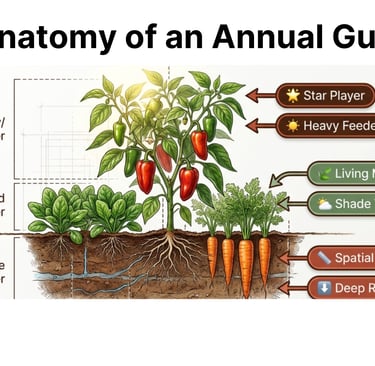
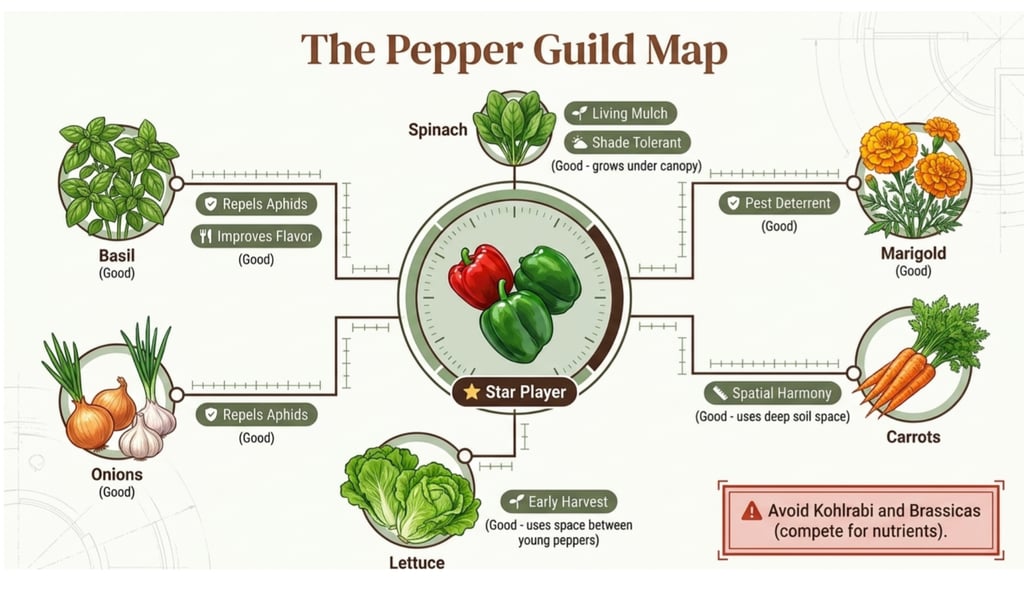
The Pepper Guild
Spinach works well as a living ground cover under peppers in early spring — it'll die back right as the heat arrives. For hotter climates where spinach bolts fast, try New Zealand spinach or Malabar spinach instead; both are heat-tolerant and will keep going through summer.
The Potato Guild
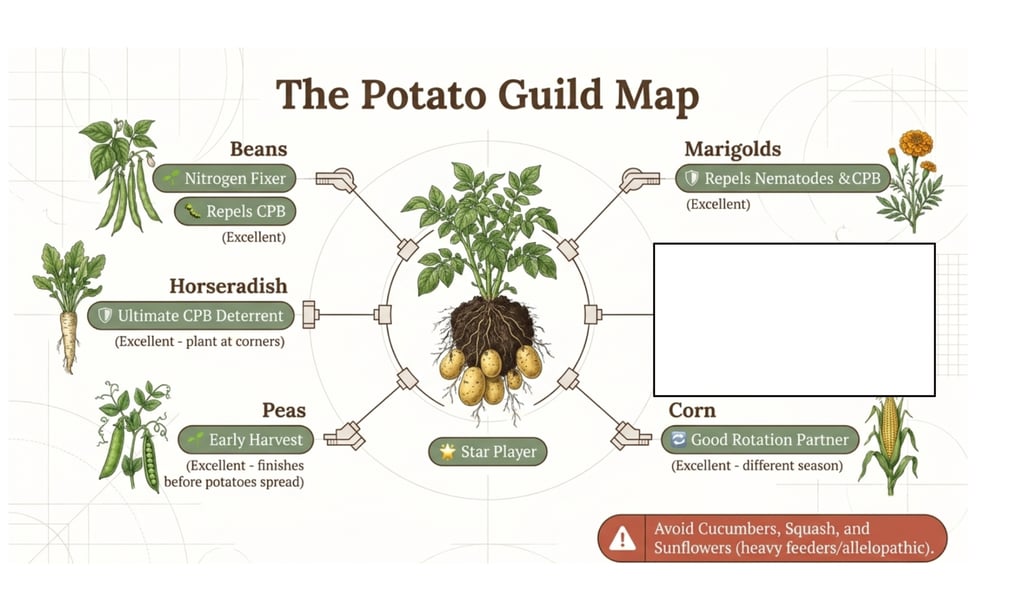
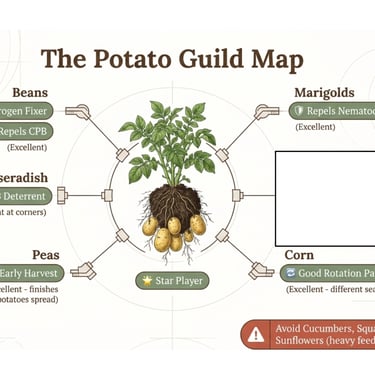
Marigolds deter the Colorado potato beetle. Horseradish and corn planted nearby also confuse this pest — the beetle won't jump across a wide planting to find its host. Peas work well on the early end of the potato season and will be done right as potatoes hit their stride.
What NOT to Plant Near Solanaceas
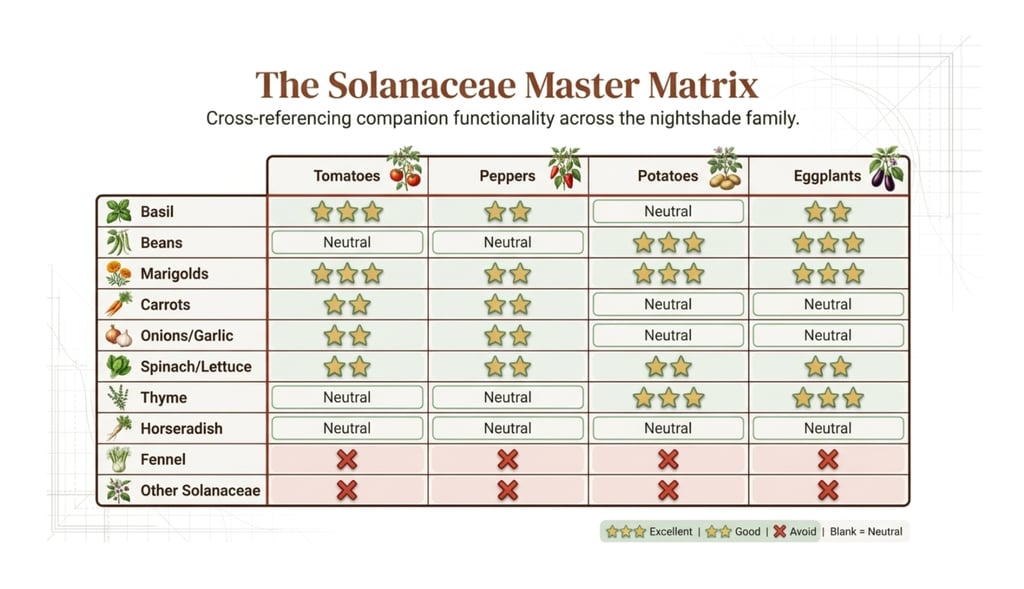
Fennel is the one plant that is antagonistic to almost everything. Keep it completely isolated from your Solanaceae beds — and most of your garden, for that matter.
Onions and garlic can be fine depending on timing, but we treat them as sometimes-yes, sometimes-no companions rather than reliable guild members for this family.
And again: never plant Solanaceas next to other Solanaceas, and never in the same bed two years in a row.
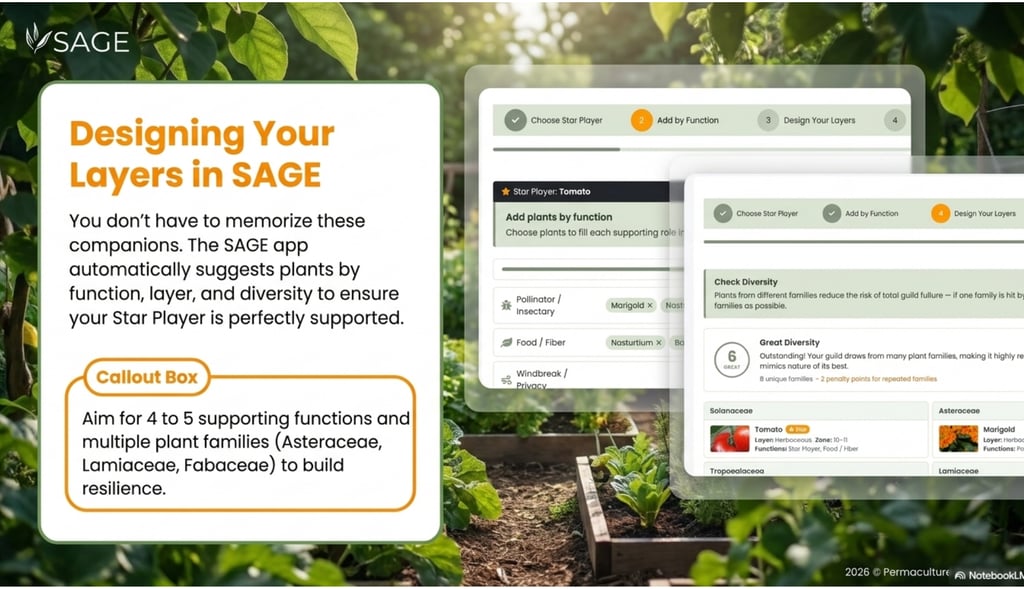
If you're using SAGE, the app automatically suggests companion plants and flags incompatible combinations — so you don't have to memorize any of this.
The Eggplant Guild
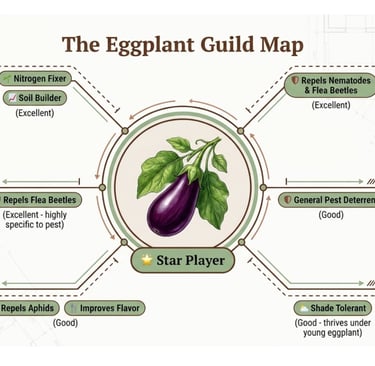
Marigolds are just an excellent attractant of pollinators and deterrant of insect pests. The number one pest for us is the flea beetle so we've created this guild riddled with aromatics to confuse and disuade that beetle to fly elsewhere and leave our eggplants alone.
Fertilizer, Mulch, and Midsummer Care
Organic Fertilizer vs. Compost — What Matters More and When
We grow organically, so our approach to feeding is building soil rather than supplementing plants. That said, by July when plants are flagging and soils are dry, a few targeted inputs make a real difference.
One thing worth understanding first: if you're adding straight nitrogen fertilizer to a tomato plant that's already large and leafy, you'll get more leaves, not more fruit. The plant shifts its needs during fruiting. Calcium, sulfur, and trace minerals matter more at that stage than nitrogen.
What we reach for in midsummer:
Compost tea — water infused with compost, applied directly to the roots
Kelp or seaweed — trace minerals that are often depleted by midsummer
Rock dust (sold as Azomite) — broad-spectrum trace minerals that support fruit set
Eggshells — slow-release calcium, most useful as a July side-dressing
Mulch Recommendations for Solanaceas
For Solanaceas, we use straw mulch — not wood chips. Wood chips are better suited to perennials and pathways. Straw breaks down faster, keeps moisture in the soil, and cools the root zone during summer heat.
Don't be shy about it. Six to twelve inches of straw mulch around your tomatoes will make a measurable difference in July. And if you didn't plant companions and weeds grew in instead — leave them in July. Bare soil in the heat is worse than weeds.
Frequently Asked Questions About Growing Solanaceas
These are real questions from our webinar attendees — exactly the things that come up when you're actually growing these plants.
Should I keep indeterminate tomatoes to a single main stem?
You can, but it's not always practical. A single-stem indeterminate will get very long very fast and needs serious staking. We keep two or three main branches on our indeterminates — it's a manageable compromise between yield and support. If you want neat and tidy with easier staking, semi-determinate varieties are a better fit than pruning an indeterminate down to one stem.
What about bush beans with tomatoes? Do they actually help?
Yes, with a caveat on timing and spacing. Bush beans release nitrogen mostly when they're not actively fruiting, which lines up with the tomato's vegetative phase. Use a ratio of about six to eight bush bean plants per tomato. Just make sure you're not planting them so close that you can't access the tomato easily — both plants get bushy, and you need to be able to prune and harvest.
Can I grow potatoes from grocery store potatoes?
You can, but results vary. Most grocery store potatoes are long-season varieties from northern climates and may not perform well in your region. They can also carry disease. Seed potatoes are worth the investment for more predictable results. That said, if you planted a mix of yellow, red, purple, and russet store potatoes — enjoy the surprise at harvest. Different skin colors suggest different varieties, and they'll likely give you a beautiful mixed harvest.
Do eggshells actually help tomatoes?
Yes, but timing matters. Eggshells provide calcium, which tomatoes need most during fruit development — typically in July. Side-dressing in midsummer is when you'll see the real benefit. Sprinkling eggshells at planting time in spring is less targeted. If you're seeing blossom end rot, that's a calcium signal and a good time to side-dress.
How important is fertilizer if I'm already using compost?
Good compost goes a long way — especially for vegetative growth. But by midsummer, when the plant is fruiting hard and the soil is hot and dry, the micronutrients can become depleted or unavailable. That's when a targeted addition of kelp, seaweed, or rock dust makes a noticeable difference. Think of compost as your foundation and these as seasonal top-ups, not replacements.
What kind of mulch do you recommend for tomatoes?
Straw, not wood chips. Wood chips are great for perennials, pathways, and fruit trees — but for annual Solanaceas, straw is the right choice. It breaks down quickly, keeps moisture in, and keeps the root zone cooler. Apply it generously: six to twelve inches is not too much.
My tomato plants are over two feet tall and still in pots. Is it too late to transplant?
Not at all. Trench planting was made for exactly this situation. Leggy tomatoes transplant beautifully when you lay them on their side in a trench — the buried stem becomes a root system. Remove the lower leaves, water well, transplant in the early morning if it's warm, and you'll be fine. Solanaceas bounce back from transplanting faster than most plants.
What can I plant between my potato rows while they're still growing?
You have more room than you think while the potato canopy is still developing. Fast-growing companions work best: bush beans, basil, borage, calendula, or a pollinator seed mix. Marigolds take a little longer to establish but flower all summer once they do. Even if you just let something weedy fill the space — better than bare soil.
Your Next Step
The Solanaceae family is one of the most productive you can grow in a temperate summer garden. Get the soil right, rotate faithfully, give them companions, mulch heavily, and they will reward you generously.
If you want help designing your Solanaceae beds — spacing, companion plants, timing — that's exactly what SAGE was built for.
And if you want to go deeper on any of this, the full webinar is at the top of this page. Dave covers every variety in detail, and there's a lot in the Q&A that didn't make it into this article.
Permaculture Gardens - your online resource for organic & sustainable gardens.
Contact
permaculturegardens@gmail.com
Bethany Farm
41558 Stumptown Rd.,
Leesburg, VA 20176